.svg)

Why landfill gas gets lost at every stage of production
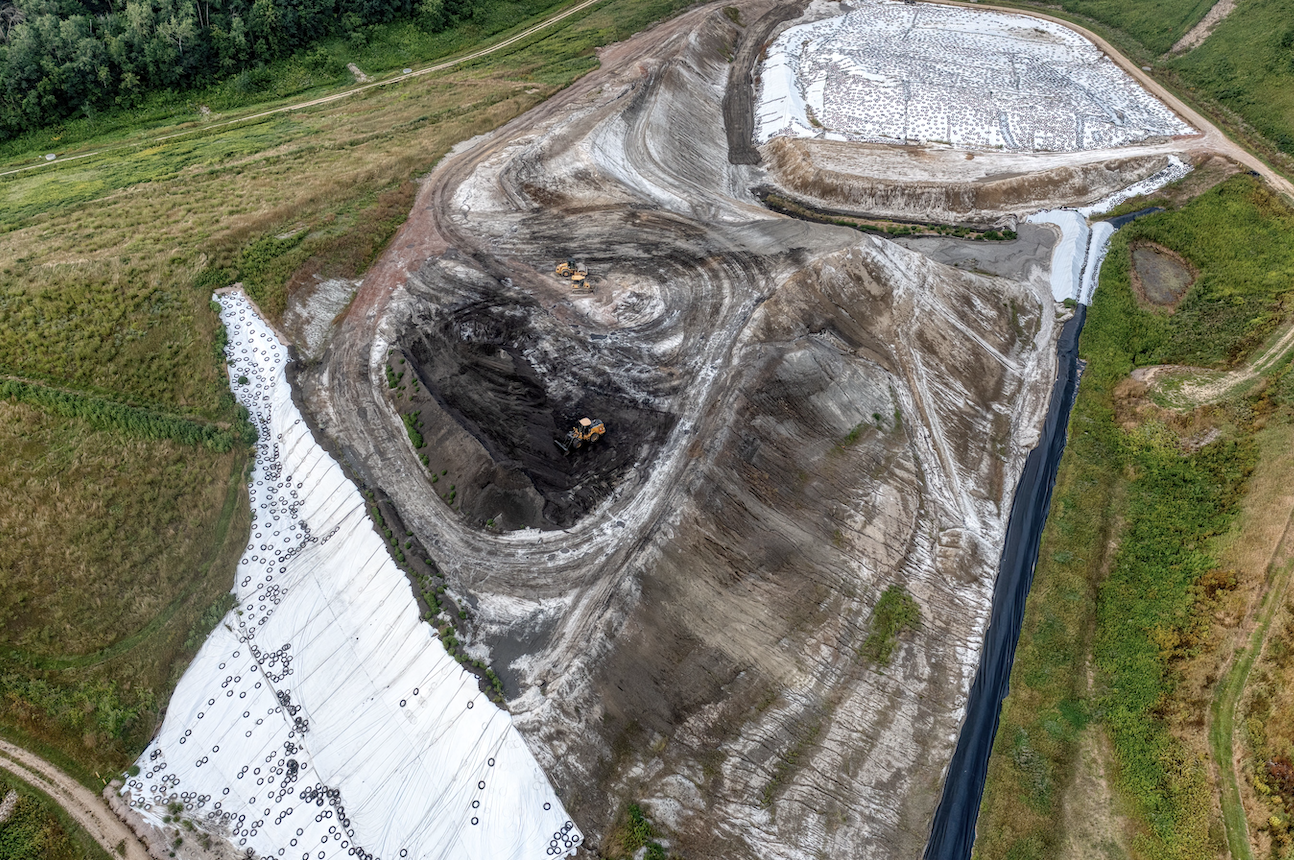
Some sites recover almost twice as much gas as others. Here's what changes at each stage.
A well-run sanitary landfill recovers as much as 90% of the gas it produces. A typical one recovers closer to 50%.
The difference is not the gas, the bacteria, or the hardware in the ground. It is how well the well field matches what is happening beneath it.
That is harder than it sounds, because a landfill is never one age. It moves through a sequence, in pieces, at different speeds in different area's of the same site. Each stage of that sequence loses gas for its own reason, in a way that's easy to miss until it's already cost you something.
Below a summary of what happens at each stage throughout a landfill's lifetime.
A landfill cell
A landfill is built up in cells: sections of the site filled gradually, layer by layer, often over the better part of a year or more, then capped and left alone. Cells go in one at a time, so a site that's been open for a decade is still filling new cells alongside others that got years’ worth of a landfill gas production.
Inside any one cell, the waste moves through four recognized stages.
- Fresh waste still has oxygen trapped in it, so it starts out as aerobic decomposition, closer to a compost heap than a gas field.
- Once that oxygen is used up, the first anaerobic phase, acidogenesis begins, producing mostly acids, hydrogen, and carbon dioxide.
- From there it moves into acetogenesis, still anaerobic, but almost no methane yet.
- Only once those settle down does methanogenesis take over, the stage where methane-producing bacteria finally dominate and gas output climbs toward its peak.
Inside a landfill cell, none of that happens at a set pace. Waste buried first, is further along than what went in last near the top. The type of waste also changes the pace of decomposition. Methane usually shows up within a few months to a year of burial, and a cell tends to peak between 5 and 10 years after that.
Scale that up, and a landfill becomes something like an uncontrolled digester: one site holding waste at every stage of decomposition at once, each pocket inside producing gas at its own rate. That mix looks a little different depending on which stage of the site's life you're standing in, starting with the stage where it's most extreme: while the site is still open.
The open, active site
.svg)
This is the stage with the widest spread of ages in one place: new waste going into open cells while others nearby already have months or years of decomposition behind them. It's responsible for roughly 30% of the methane a site will ever produce and it comes with two main challenges.
The first is at the surface. The active cell has no cap yet, so part of the gas escapes straight into the air instead of down a well and that's usually what turns into an odour complaint.
A 2025 study of 10 landfill sites summed it up:
At sites already running gas collection, 76% of all leaking landfill gas traced back to the active, uncapped waste pockets.
The second is underground. A newer cell still has oxygen in it and is barely producing methane, while a mature one nearby needs more vacuum. Pull too hard near the young cell and air gets dragged into the mature one. Pull too gently to protect the mature cell and gas from the young one escapes before it's captured. Both can happen in different areas of the same site at once.
A periodic well-tuning walk-through gives you one reading, at one moment. By the next visit, the site conditions have already changed. This is what the cost of measuring and tuning late looks like on this stage.
The decades following closure
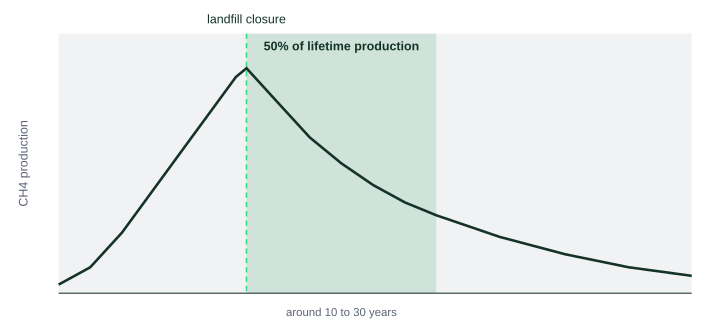
Once the trucks stop coming, the picture gets simpler and the stakes get higher at the same time. There's no new waste diluting anything and the cells filled years earlier have long since settled into full methanogenesis. Methane is now making up the bulk of the gas rather than a fraction of it.
This is the site's best period, and its most valuable: roughly 50% of lifetime methane will be produced in this window, estimated to last 30 years.
The real length varies with the site: wetter waste can work through most of this output in a decade or two, drier waste can spread the same share across twice that.
The well field usually gets weekly or even monthly. However, conditions can change faster than that. A change in suction pressure nearby, a heavy rainstorm that raises leachate levels, or a cracked cap letting air in can all shift a well within days. Waiting until the next scheduled walk of the field to catch it can heavily reduce your engine uptime and cost you real gas, right in the middle of the highest-value years the site has.
Closing that gap doesn't need a new idea, just the same one under higher stakes: continuously match each well to what’s actually happening around it, not to what it was doing at the last visit.
The long tail
.svg)
Years turn into decades, and the numbers get smaller: maybe a fifth of the site's lifetime output is still ahead of it, though how long that fifth takes to come out is site-dependent, closer to another 20 or 30 years at a wetter, faster-decaying site, and 70 years or more at a dry one. It's easy to think of this as the residual stage, not worth much attention.
That instinct is usually wrong, for a specific reason.
Standard engines often require methane to not drop below 30 to 40%, so the common move is to decommission power generation there and just flare the rest away.
But a site can keep producing usable methane for decades past that point and the real limiter usually isn't the gas, it's how the wells get treated once nobody's expecting much from them.
A well that once handled a strong pull starts struggling as production winds down, yet the same setting that suited it for years often goes untouched, and pushing it that hard drags air in behind the gas, cutting quality and harming the bacteria still making it.
The idea here is about recognizing when a well is starting to drop off, and easing the vacuumto match instead of holding the same setting until it fails. Most of what gets lost in the tail isn't gone..
The whole site, at once
Every fix above comes down to the same thing: knowing exactly which stage the landfill wells are actually in. In the open site, that means catching an oxygen problem as it starts. After closure, it means catching a shift within days instead of a month. In the tail, it means noticing a well drop off before it turns into a lost one.
Doing that by hand means choosing which wells to check and how often, and missing whatever happens in between. Doing it continuously, reading methane, oxygen, and pressure at every well, all the time, means nothing gets missed, and every well gets tuned for the stage it's actually in.
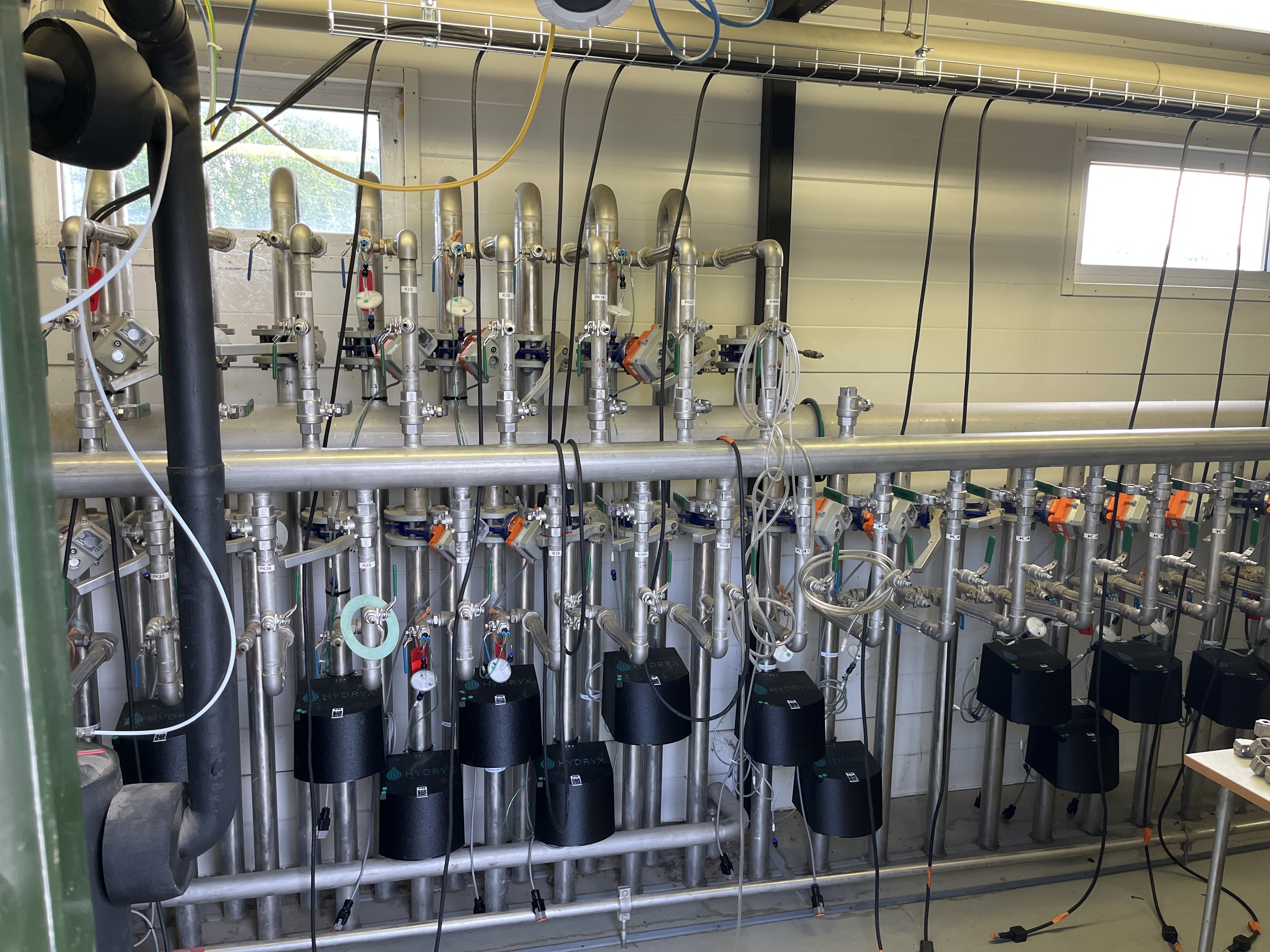
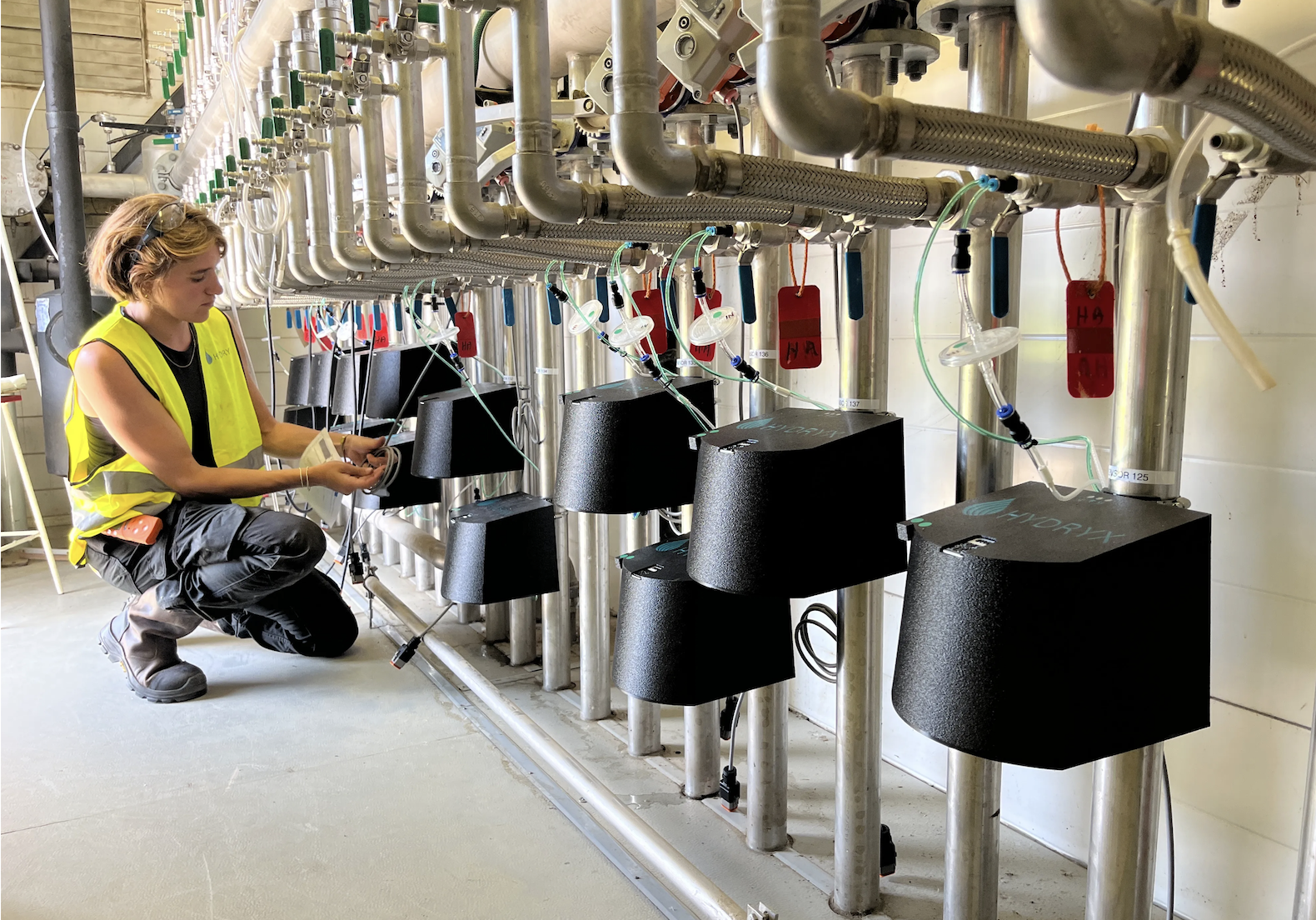
That's what Hydryx does. Sensors and actuators clip onto the wells already there. A site-specific model adjusts every valve as conditions change. Across live sites that's meant more than 30% more green energy captured from gas already in the ground, and whether a site is freshly opened, mid-life, or deep into its tail,
Hydryx works with it at whatever stage it's in. Reach out to us and find out how much more energy you can get out of yours.

.svg)


