What makes a landfill smell?
Landfills smell when waste breaks down the gases it produces reach the air. Most of that gas is methane and carbon dioxide, which have no smell. The odour comes from trace compounds mixed in with them. More than 100 different odorous compounds have been identified at landfills.¹
However, four groups of gases do most of the work:
- Hydrogen sulfide (H2S): the rotten-egg smell. It comes mostly from plasterboard, which contains gypsum, and from protein-rich food scraps like meat and eggs.
- Mercaptans: a rotten-vegetables smell. They come from protein-rich waste such as food scraps and sewage sludge.
- Ammonia: a sharp, nose-stinging smell. It comes from food scraps, grass clippings and manure, and is strongest around sewage sludge.
- Volatile organic compounds (VOCs): chemical-smelling gases from everyday materials like food, wood, paper and paint.
Most of these compounds can be smelled at concentrations far too low to harm health. The mix changes from site to site, depending on what waste the landfill accepts.
Smell can come from many places in the landfill. Buried waste, the working face where fresh waste is dumped, delivery vehicles, leachate and sludge handling, can all emit smell and so does landfill gas that escapes through the cover or a poorly performing gas system.
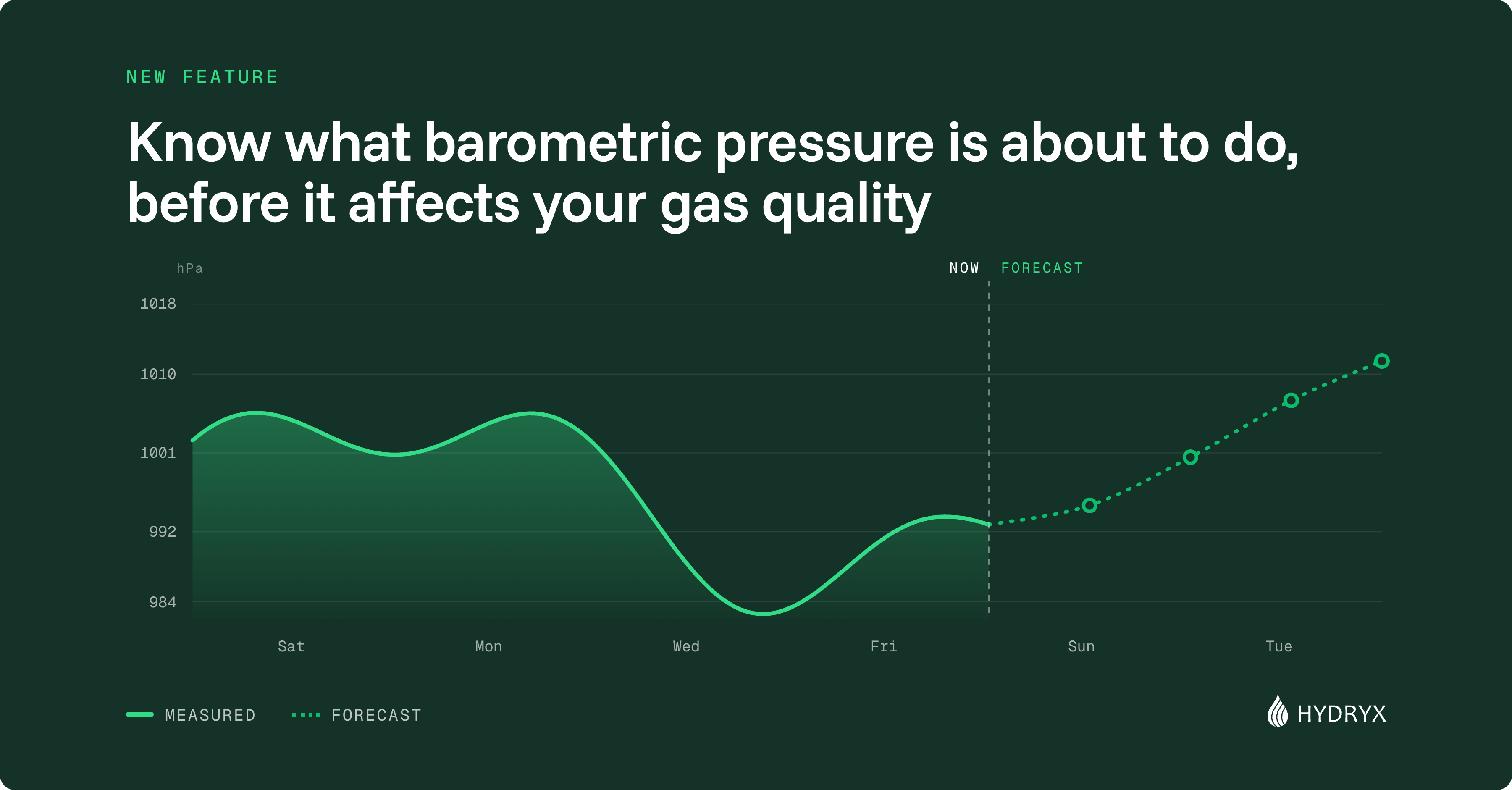
Weather decides how far it travels. Landfill gas emissions generally rise in colder weather and still wind, when there is less to disperse them. A temperature inversion can trap smells near the ground, and a drop in air pressure at night or in the early morning can carry them further offsite.
What happens when a landfill gets complaints?
Regulators usually treat a complaint as a trigger. An officer visits the site, checks that the smell really comes from the landfill, and looks at whether the site is using all appropriate measures to control it. No landfill is completely free of odour, so the question isn't whether there is any smell at all.
Penalties usually come only when officers confirm the smell is coming from the landfill and the site isn't doing enough about it. They vary a lot by country:
- Scotland: a landfill was fined £10,500 for odour from escaping landfill gas.³
- Netherlands: authorities typically use a penalty-payment order. After odour complaints to a regional environmental agency, a waste processing company was ordered to comply with its permit on pain of €10,000 each time a breach was recorded, up to €50,000.⁴
- New South Wales, Australia: a landfill was ordered to pay A$520,000 in fines and costs after more than 200 complaints, in a case where the regulator had required a gas extraction system to be installed.⁵
How do landfill engineers tell where odour is coming from?
Engineers build the picture from three kinds of evidence.
- A weather station and a complaint log that records the time and wind show whether the wind was blowing from the site towards the person who called.
- Patrols at different times of day, including early morning before the site opens, catch what a daytime visit misses.
- Surface scans for methane then show where gas is coming up through the cover.
Keep the complaint log next to the gas system's records for the same hours, and you can check whether the site could have caused the smell.
When the gas system is the cause, the problem is often how it is working, not how big it is. A flooded or blocked well can be under vacuum and still collect nothing. Filling work can damage wells and pipework. Settling waste can leave low points in the pipes.
What can landfill engineers do to cut the smell?
The right fix depends on where the smell comes from. Engineers usually combine several measures:
- Working face: keep it small and cover waste promptly, starting with the most odorous loads. Fresh waste is where smell meets the air, so less open area for less time means less smell.
- Waste acceptance: divert food waste and gypsum where possible. Food waste drives ammonia and sulfur smells, and gypsum is the most common source of H2S, so what a landfill accepts shapes its smell for years.
- Leachate: keep collection and storage in good working order. Leachate has its own sharp smell, and keeping levels low also stops it flooding the gas wells.
- Perimeter and weather: use misting and wind fences, a weather station, daily odour patrols and a complaint log with time and wind. Misting only masks smell, but the weather data and the log show patterns engineers can plan around.
- Landfill gas capture: installing a gas collection system is extremely important. For landfills that already have one and still get complaints, optimising gas capture is the biggest lever for gas odour, as the next section shows.
Optimising landfill gas capture
Optimised gas capture is the biggest lever for reducing gas odour complaints.
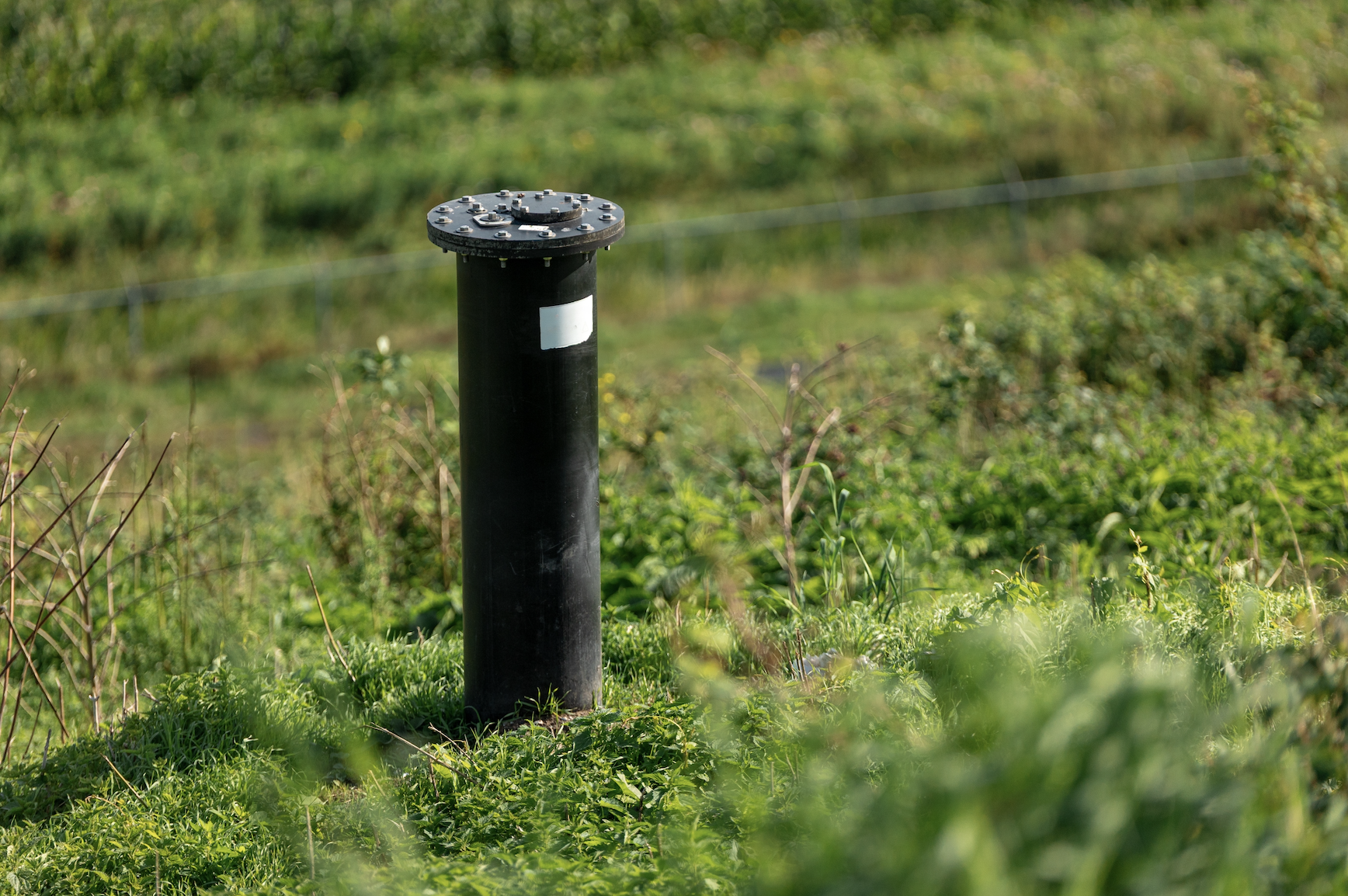
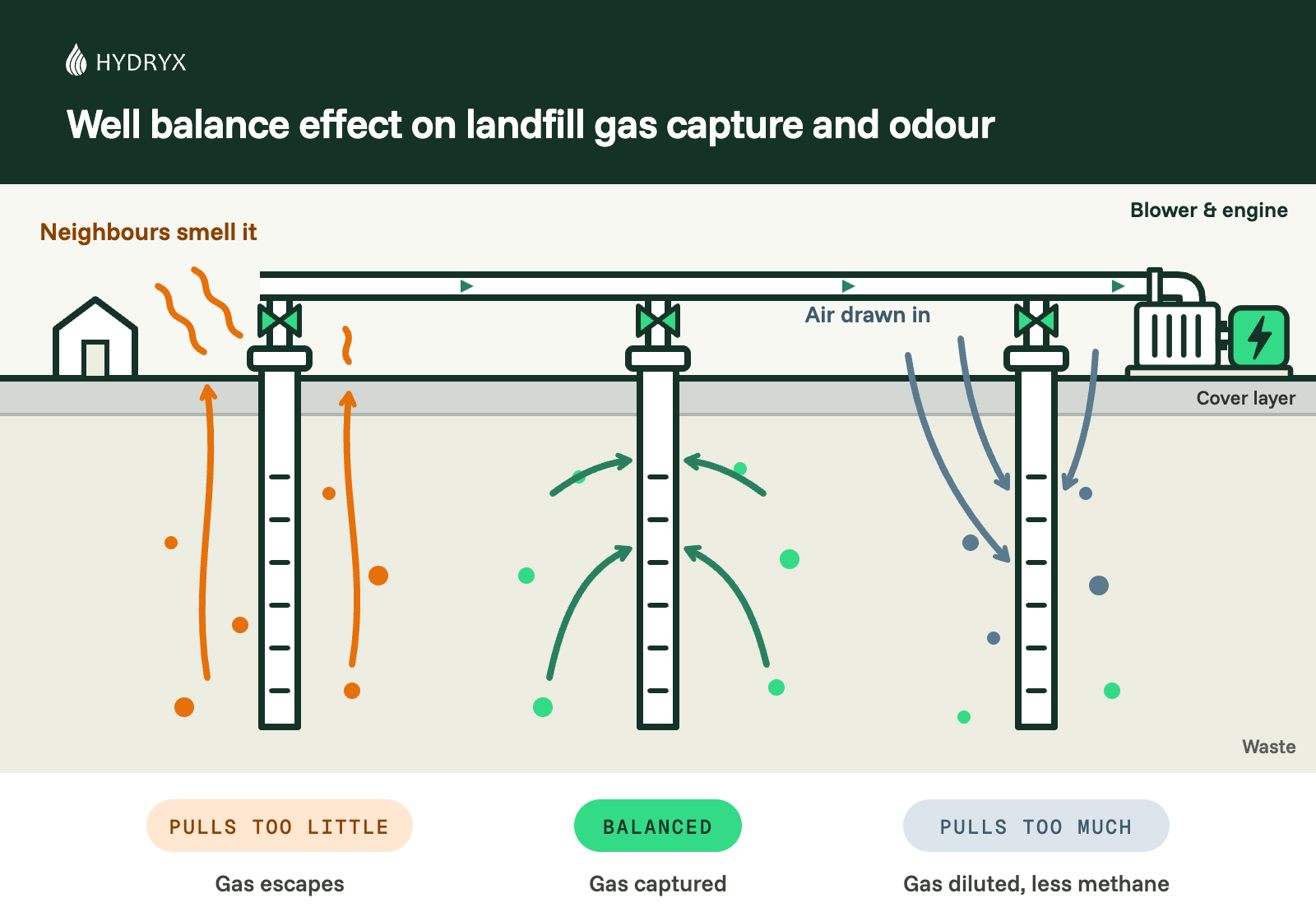
Landfill gas is collected through wells drilled into the waste. Each well is piped to a blower that pulls the gas out, and a valve at the wellhead sets how hard that well pulls. Getting every valve right is what decides whether landfill gas odour is controlled.
If a well pulls too little, gas that should have gone to the pipe escapes through the cover, and that is where neighbours smell it. If it pulls too much, air is drawn into the waste, which dilutes the gas, can reduce methane production and raises the risk of fire. So engineers cannot simply turn the vacuum up. They balance each well using a few measurements at the wellhead.⁶
Three readings show how that balance can fail, and what each can mean for odour:
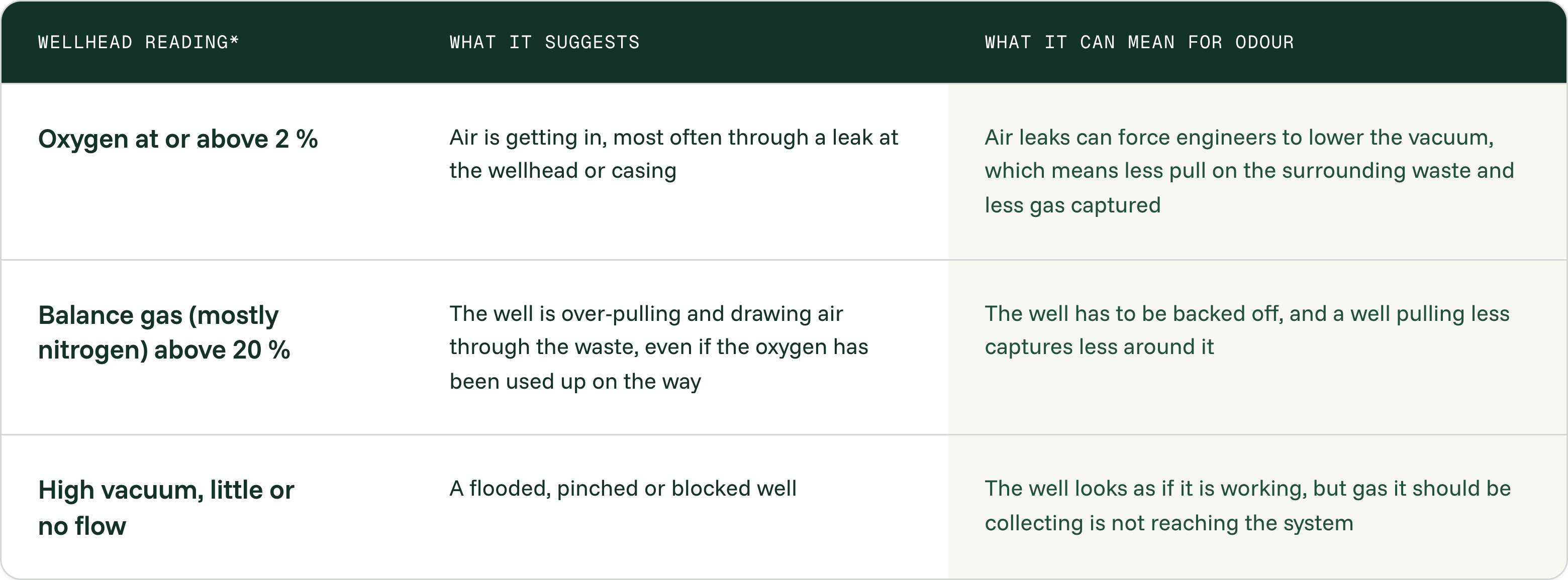
The difficulty is timing. Waste settlement, rain, flooding, air pressure changes and damage from filling all change what a well is doing, and often sites check and adjust the wells just a few times per month. Between those visits, conditions and well capture can change without anyone seeing it.
Does better landfill gas capture reduce odour complaints?
Regulators think so. The EU Landfill Directive requires landfill gas to be collected at every site that takes biodegradable waste, then used or flared², and the Netherlands and Finland build gas capture into their landfill rules.⁷,⁸ The UK Environment Agency lists capturing and burning landfill gas among its core measures for controlling odour.
Documented cases point the same way:
- Tumut, New South Wales: after more than 200 complaints, the regulator directed the site to install a gas extraction system. Complaints fell significantly once it was running in September 2023.⁵
- Eastern Creek, New South Wales: about 750 complaints between March and June 2021, with the odours attributed to inadequate gas extraction. The company running the site was fined A$280,000.⁹
- Brookhaven, New York: state regulators concluded that H2S from the landfill was causing the odour. The fix included redesigning the gas collection system, repairing the sulfur treatment system and installing 10 new vertical wells.¹⁰
- Kuopio, Finland: after residents complained of H2S smells from a waste centre, the site installed five new gas collection wells and said more wells, more cover and a smaller active area should cut the smell.¹¹
How automated, continuous tuning reduces gas odour complaints
Gas odour is controlled well by well. Hydryx balances every well every 15 minutes, on the infrastructure you already have.
With every well kept balanced, less gas escapes through the cover, which is where neighbours smell it.
You can't measure odour well by well, but you can watch what every gas well is doing. Hydryx runs on live landfill sites in the Netherlands, Finland and the UK, and handles the part of odour control that depends on the gas wells: the optimising described above, done continuously instead of a few times a month. Sensors and actuators clip onto the wellheads you already have, so there is nothing to build, replace or modify, and no permit to apply for.
Between tuning visits, the sensors read methane, oxygen and pressure at each well every 15 minutes, and a model built for the site sets the best valve position for every well. For example, when a well's oxygen starts to climb, a sign it is pulling air, the engineer gets an alert and the system eases that well within the limits they have set.
If your site continuously has odour complaints, optimizing your gas capture with Hydryx is the best step you can take towards reducing your complaints, and getting more gas out of your existing infrastructure. The assessment is free and usually takes a week, starting now with a short call.
Sources
- Emissions and control of hydrogen sulfide at landfills, a review (hosted copy)
- EU Landfill Directive, Annex I
- Envirotec, SEPA fine for landfill gas odour, 2012
- Dutch Council of State ruling on a penalty-payment order
- NSW EPA, Tumut Waste
- US EPA, LFG Energy Project Development Handbook, chapter 8
- Besluit kwaliteit leefomgeving, article 8.53
- Finnish landfill control summary
- Climate Control News, Eastern Creek fine
- NY DEC, Brookhaven landfill
- Yle, Kuopio waste centre