.svg)

Landfill gas wells change by the day. Most sites still check them by the week.
Barometric pressure, cross-well effects, oxygen ingress: what manual tuning misses
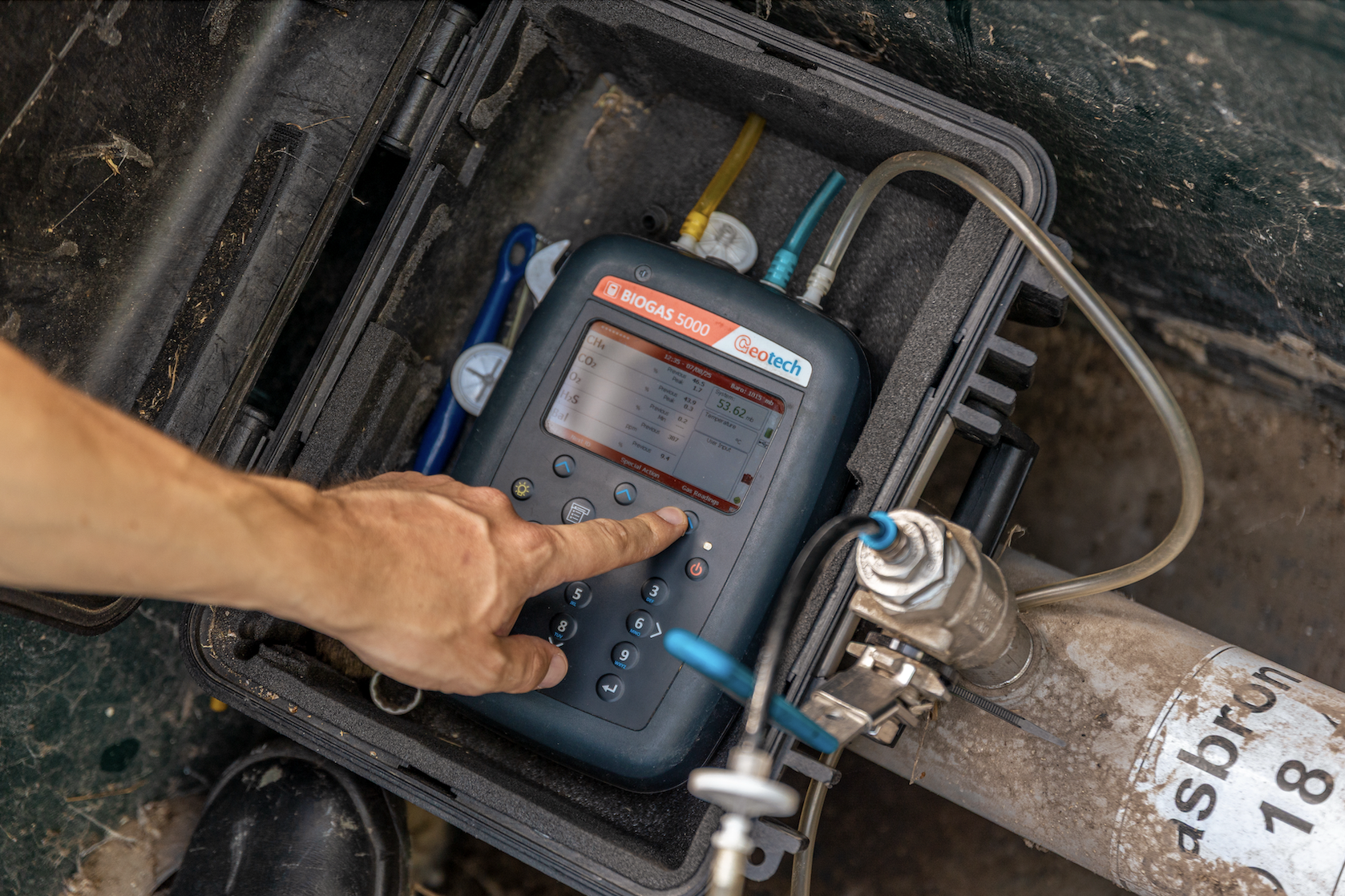
A well that checks out perfectly on Monday's round can be losing gas by Wednesday, and nobody finds out until the engineer measures it next week. That's the real expense of tuning by hand: not that it's slow, but that everything happening in between is invisible until someone walks up and reads it.
Most of what causes that change has nothing to do with the well itself. The weather shifts. A valve gets tightened three wells over. A crack nobody's found yet lets air into the line. None of it waits for a weekly or monthly round, and here's what each one actually looks like on the ground.
Barometric pressure: Why the weather outside decides what's happening underground
Barometric pressure is the weight of the atmosphere pressing down on a given place at a given time. It rises and falls constantly, and a landfill feels it directly: when barometric pressure is high, that extra weight pushes air down into the ground.
This does two things.
- It acts like a heavy blanket over the ground, restricting how landfill gas can move through the soil and reducing the flow reaching the wells.
- That same pressure pushes air down into the ground, and wells in or near an uncapped section are the most exposed to the oxygen ingress that follows.
These shifts happen on two timeframes at once: small but real changes within a single day, and bigger trends that build over the course of a week.
The pressure trend itself isn't hard to see; it's public weather data. What's hard is knowing how the wells are actually responding to it, and that only shows up in a gas quality reading.
If that reading comes around once a week, the field's response to a barometric swing is already old news by the time anyone sees it, with no chance to act on it while it was still unfolding.
Oxygen: Easy to measure, hard to locate
Oxygen ingress is closely tied to barometric pressure, but it isn't only caused by it. Over-extracting a well, a crack in a soil cover, a damaged pipe: any of these can let atmospheric air into the collection system too.
Most sites already monitor gas quality closely, often continuously, so a rise in oxygen rarely goes unnoticed for long. What's missing is knowing where it's coming from. On a large site, tracing an ingress point back to its source can mean walking multiple sections by hand, checking wellheads, covers, and piping one at a time, and by the time the source is found, the effect has usually already been felt for days.
That gap has a real cost.
- Oxygen lowers the quality of the gas being collected right away, since diluted gas burns less efficiently.
- It shifts the decomposition from anaerobic to aerobic, so that affected section starts producing more CO2 relative to methane. This biological shift is a slow, compounding effect; a pocket of oxygen ingress left unaddressed works against field productivity for weeks.
- Finally, methane and oxygen result in an explosive mixture, creating an unsafe site and triggering a shut-off of the entire gas extraction system due to safety levels.
The cross-well effect: How one valve change affects the neighbouring wells
A single blower pulls vacuum through the entire gas collection system, and every wellhead valve controls how much of that vacuum reaches that particular well. Too little suction, and methane gets left behind; too much, and the well starts pulling in air along with it. And because that vacuum is shared, no valve operates in isolation: tighten one well's valve and the neighbouring wells suddenly have more suction to work with, open it and they have less.
This is why the cross-well effect is so hard to manage by hand. A walking round means moving from well to well, adjusting each valve based on the methane quality reading in front of you at that moment.
There usually isn't time or a practical way to wait for the field to settle and see how that adjustment shifted pressure on the wells already checked, or the ones still ahead. So each move relies on experience and intuition for how the rest of the section will respond, not a confirmed read of it.
So checking one well at a time, even carefully, only ever shows part of the picture. The question that actually matters is what's happening to the pressure balance across the whole section, since that's what determines whether the field as a whole is extracting as much gas as it could be.
The opportunity: a continuously monitored, tuned field
None of this is something a person can fully solve by walking the field. It would mean re-evaluating every section's position continuously, every time the weather, the gas, or a neighbouring well changes, and confirming the result of each change before making the next one.
Continuous tuning gives the field exactly that.
- Sensors monitor gas quality and pressure across each section roughly every 15 minutes instead of every week, and a site-specific model computes the optimal valve position for the field as a whole, accounting for how each section affects the ones around it.
- Actuators apply the new positions automatically, and every adjustment gets checked against its actual result rather than assumed to have worked.
The field is not rebalanced in a round. It is held in balance continuously, the same way any other real-time system is.
What this means for the engineers running the site
Continuous tuning saves time on manual measurement and adjustment, but the bigger opportunity is what that time goes toward instead.
- Instead of spending a morning walking wellheads with a handheld gas analyzer, engineers can plan ahead for a barometric pressure spike, scheduling generator maintenance around it instead of being caught out by it.
- They can catch an oxygen ingress event early enough to keep gas quality out of the range that trips a generator shutdown, instead of losing production to it.
- And by tuning how much suction pressure each well actually needs across a section, rather than doing it intuitively well by well, they can pull more gas, and more revenue, out of the same field.
The system gives engineers more room to run the site well, not just more time spent measuring it.
Where Hydryx fits
This is exactly the read continuous tuning is built to give. Hydryx’s automated system samples gas quality and pressure across each section roughly every 15 minutes, instead of once a week, so a barometric swing, an oxygen entry point, or a shift in a section's pressure balance shows up while it's still forming, not after it's already cost a few days of production.
Sites that have moved from periodic manual balancing to continuous tuning have seen energy output rise by more than 30%.
None of this requires new wells, new infrastructure, or a shutdown to install. Hydryx works with the valves and measuring points already on the wellhead: no gas line gets opened, no valve gets swapped, the field just starts being read and adjusted continuously instead of once a week by hand. Contact us to see how much you can optimize your site with continous tuning
.png)

.svg)


