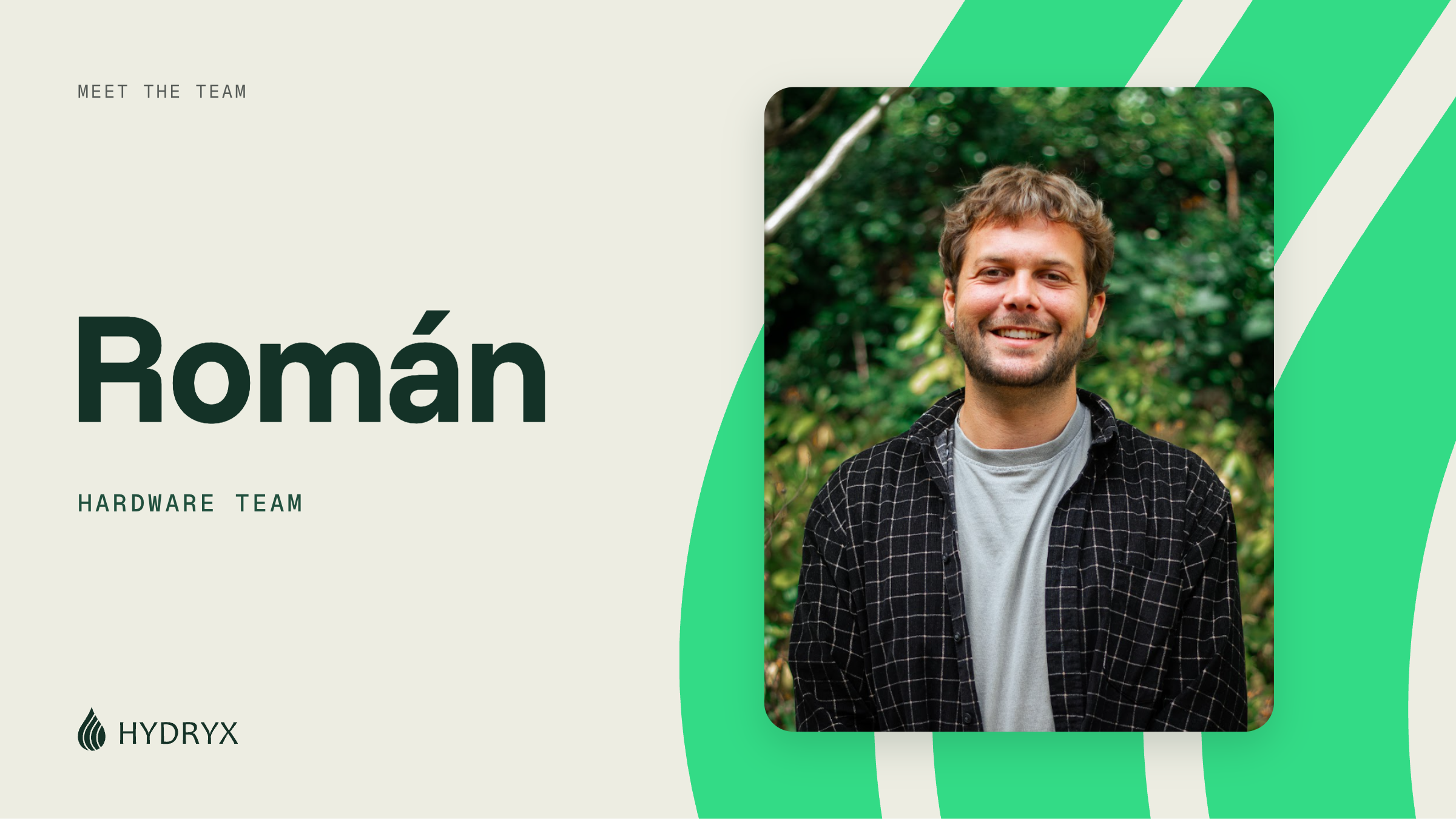
Recently we have been looking to showcase some of the valuable team members we have at Hydryx. The first person that came our mind was Román.
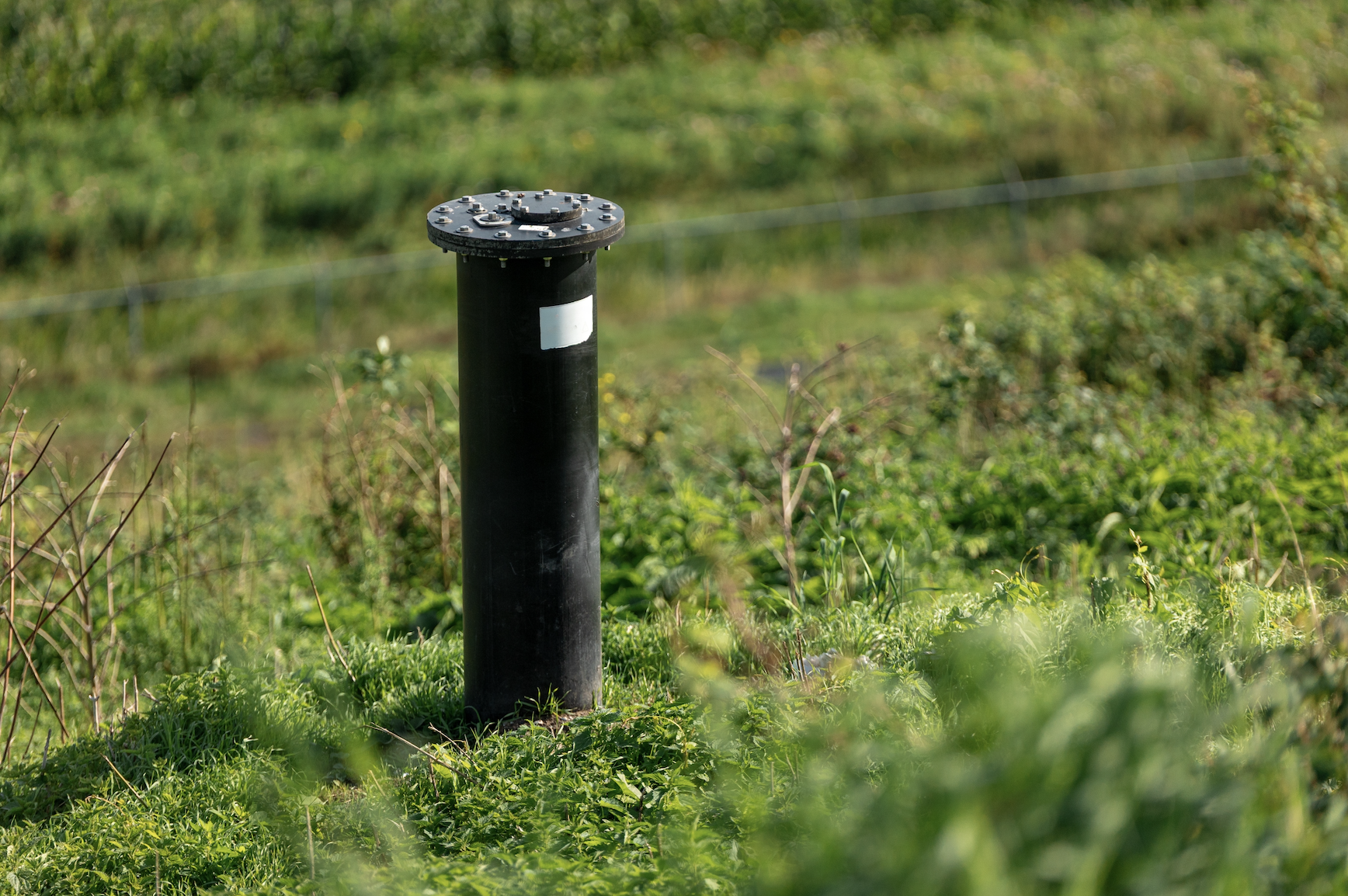
We sat down with him to learn more about his time at Hydryx. We hope it gives you a sense of what it’s like to work here, and of the care that goes into the sensors running on the landfill gas wells.
Meet Román

What’s your role at Hydryx, and how did you start?
My name is Román, and I’m an embedded engineer. I started on the 1st of July, 2025, as an intern, and after three months I was promoted to a full-time role.
Before that I lived in Berlin, where I finished my bachelor’s at the beginning of 2025. I moved to Amsterdam in April 2025 because of my relationship.
Why did you choose to work at Hydryx as an embedded engineer?
Everybody says that with my kind of job you will always have work. But it’s pretty unique to find the intersection of embedded or computer engineering, which is what I studied, with something meaningful for climate, sustainability and green energy.
So when I first read about Hydryx, I was curious. I wanted to know what reducing emissions meant in practice.
I texted Joren, and it went very straightforward. I think I got a reply at 10 PM. The next day I was like, hello, somebody replied at 10 PM, what a hard worker guy.
What does the team usually come to you for?
My expertise is firmware development: everything that runs on the sensor itself.
The hardware team is pretty much three of us, plus Henry, who is the CTO and our direct communication channel. Wesley does PCB design, and sometimes helps me too. Max is more on mechanical and product engineering.
For example, Max is running an experiment on how to reduce water ingress through the pipe. For that he needs the pump to do certain things, to switch on or off, or to use some components and not others. So he comes to me, we break down the test plan, and he asks if it’s doable. I give him the code, he tries it and gets a result. It’s teamwork in that sense.
Working at Hydryx
What is it like to work at Hydryx compared to what you expected?
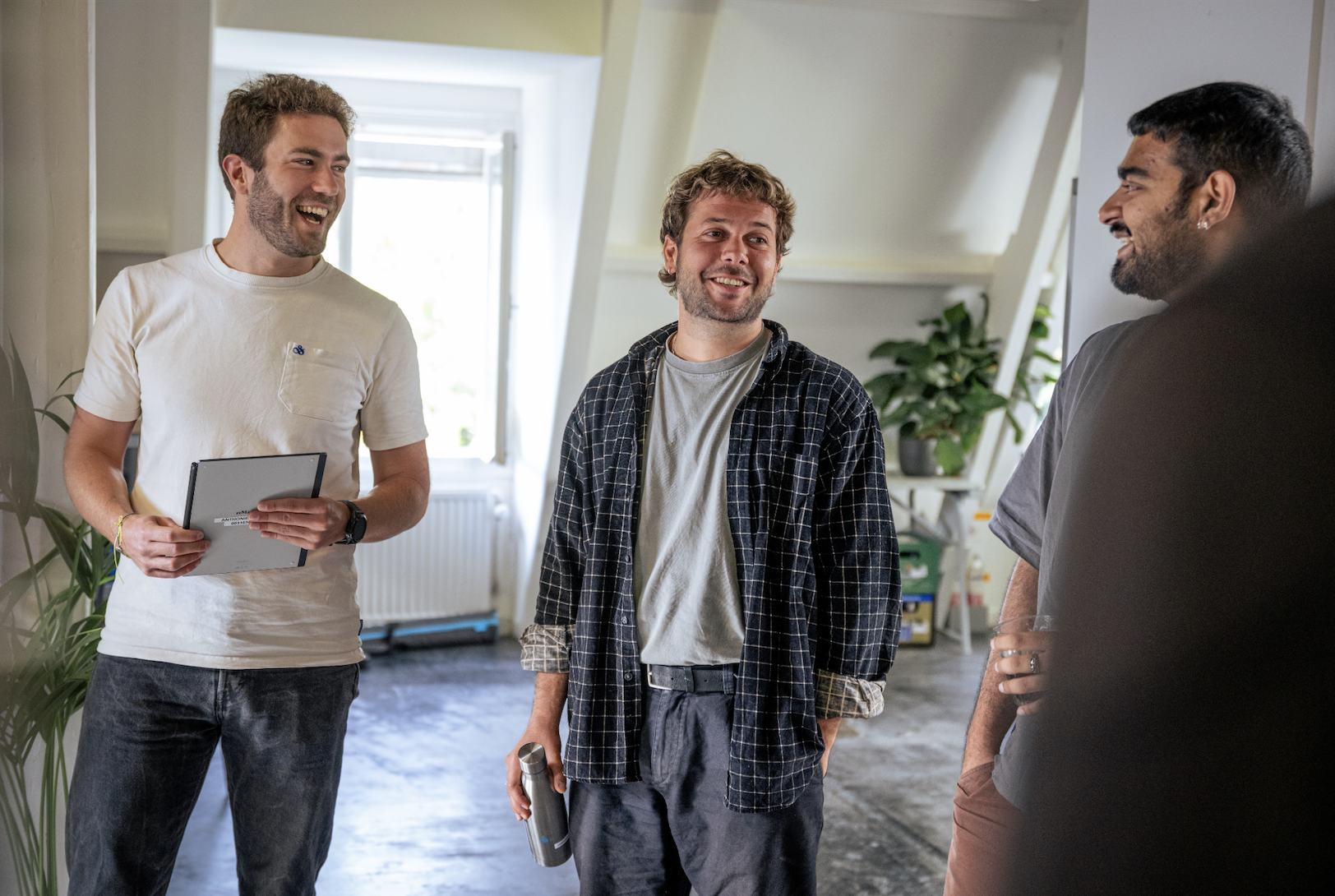
Before Hydryx, I had rarely experienced work to be both serious and friendly, so my expectations followed that. However, here that was different. What we do here is serious. It’s a serious environment. But because we’re all so young, there’s a friendly atmosphere. You can joke around at lunch. That alone was new to me, because I’d never had lunch with colleagues before.
In the end, you spend a lot of time here, so you might as well make it fun. We really try to hype each other up. Whatever I expected coming in, this has definitely surpassed it.
What stands out about working at Hydryx compared to other places?
The responsibility. I’d never worked at a company this small before, and I didn’t really think about it when I started. I learned that the smaller the team, the more responsibility you share.
A lot of processes aren’t defined yet, so as an early-career engineer you get to establish them. In the end, we have to get things done, and how we do it is up to us.
I get asked, okay, we would like to have this feature. That’s it. I need to figure out how to do it, and how to break the problem down into smaller pieces so I can reach the goal, ideally, in a linear way.
That can be different from to older and bigger companies where the processes are long established. Here I really enjoy that freedom.
Hydryx is not a 9-to-5 company. We all work really hard, but nobody expects you to clock eight hours or do shift work. It’s not part of the company culture.
What’s the problem here you most enjoy solving?
Honestly, I enjoy problem solving most afterwards, once I have the solution. In the moment I’m so focused that I forget whether I’m enjoying it.
If I have to pick one, it’s upgrading hardware to new revisions. It’s always very satisfying, and it’s where I’ve learned the most since I started.
When you build something from scratch, you have to be very precise with your decisions from the beginning, otherwise everything starts adding up later. You get a domino effect, and you want to avoid that.
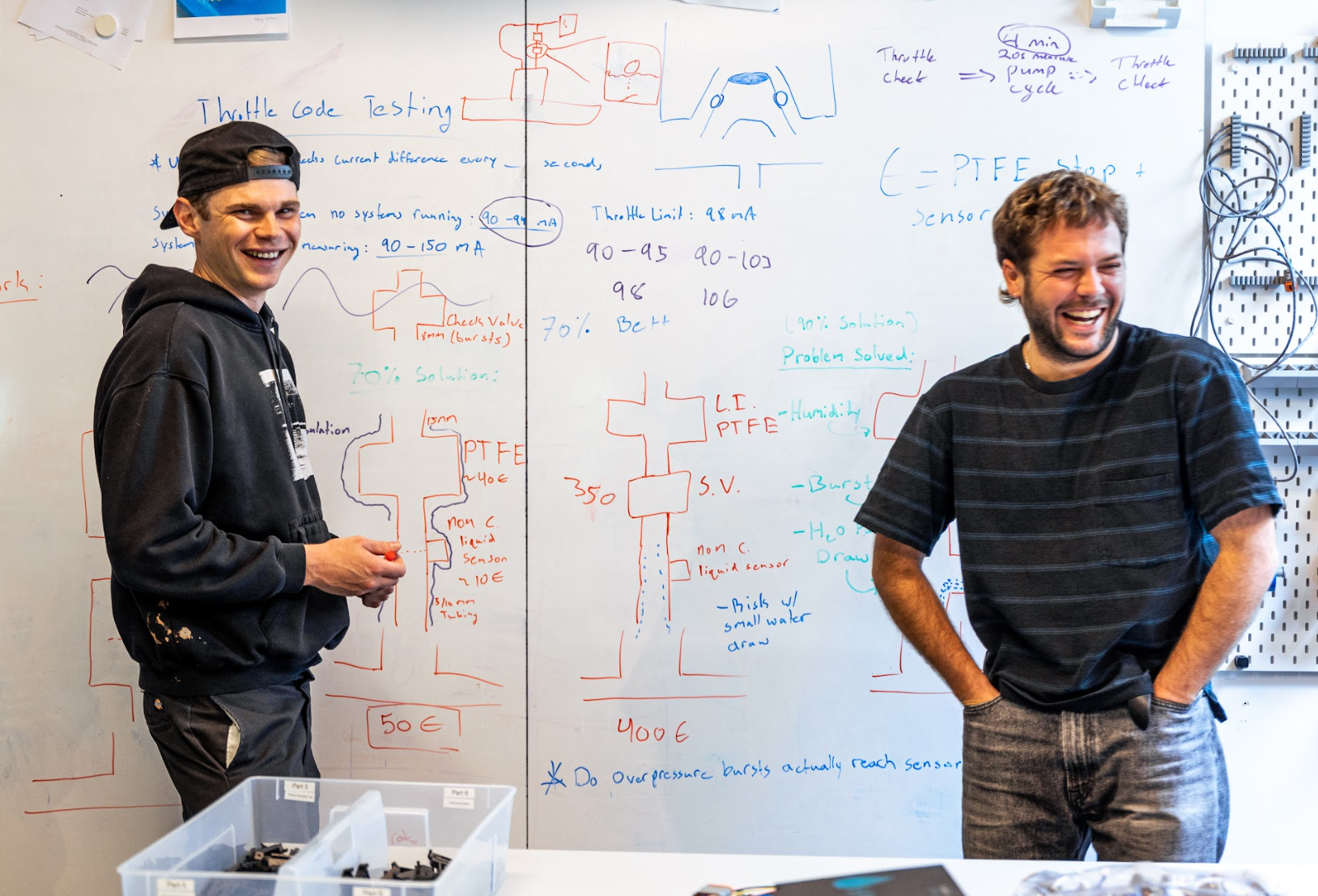
A second one was connectivity. Devices not connecting to the network is a recurrent challenge in embedded world. Wesley and I crunched for about four weeks. It was in between moving offices too.
Hardware is always in development, and new development always brings new errors. But this one was very noticeable, because if a sensor stops sending data and it’s somewhere abroad, it’s almost impossible to debug from here.
I think we solved it pretty well. Our uptime is now very reliable, and you can see it in the analytics: Most of the devices connect reliably and send data points constantly. From a data analysis point of view, that’s huge, because the more data we get, the better we understand our customers’ challenges.
For me, Developing means breaking things and knowing how to fix them. Our job is basically to solve problems. Some are way more noticeable than others, but every one of them affects the company in some way.
What have your teammates taught you?
I can tell you about that pointer I forgot to dereference but that would be out of scope for this blog (hahaha). One thing I am learning from my colleagues is the continuous development. To understand mistakes we have made in the past means we will take better decisions in the future
Outside the office
What’s your favorite Hydryx memory?
I think the Investor Day. It was when Anthonie and Joren had just closed the first seed round. They told us the investors were coming to meet us, and even asked us to wear more formal clothes, which never happens.
We arrived in the morning and got a short presentation on how the seed round went and what challenges Hydryx founders overcame. Then they told us each of us had to give a five-minute PowerPoint about ourselves, and Haadi had to present the algorithm for 15 minutes. Okay, now prepare, fast. While we were all scrambling, I was thinking, Jesus, corporate. I can be introverted when it comes to selling myself.
Then Anthonie and Joren walked in with a bottle of champagne, and music came on really loud. I’m pretty sure it was We are the Champions from Queen. It was all a setup. Anna had organized a treasure hunt around the city. We split into two groups and spent the day on games and activities. No presentations, nothing. They were like, close your laptops.
After that we went to a house, had dinner and stayed the night together. There are some pictures from it too.

What do you do outside of work?
I enjoying doing sports, meeting friends, bouldering. I also like museums, especially photography. I don’t take pictures myself, but I love photography exhibitions. The last one I went to was World Press Photo at the Nieuwe Kerk in October.
What’s one tool you couldn’t work without?
My dotfiles. And my computer (of course).
Do you have a favorite saying?
Whoever buys cheap buys twice. It’s a German saying.
It was a pleasure talking with Román and hearing about his journey through Hydryx. He’s the first in a series of team spotlights, so keep an eye out for more of the people behind Hydryx.
Embedded software engineer: applications are open
You'll build systems that optimise landfill methane capture, working in one of the world's biggest climate opportunities.
Right now we’re hiring an embedded software engineer for the hardware team. You’d write the firmware for the sensors that help operators capture more of that gas, running on live sites we can’t walk over to and debug, and you’d work day to day with Román, Wesley and Max.
It’s not our only opening, either. If your work sits somewhere else, have a look at the other roles too.
Read the embedded role and apply here, or see all our open roles.