.svg)

The countdown to 2027: UK landfill gas subsidies are ending
What ROCs are, why they're disappearing, and what it means for your site's gas capture.
For more than twenty years, UK landfill gas sites have earned extra income for every unit of electricity they produce. That income is called a ROC, and for many sites it has quietly become a significant part of the business case.
Starting in 2027, that income starts disappearing. This article walks through what a ROC actually is, why it is ending, and what that means for the sites still relying on it.
What is a ROC
ROC stands for Renewables Obligation Certificate. Here is how it works, in plain terms.
Every time a landfill gas site generates one megawatt hour of electricity, the government's energy regulator, Ofgem, issues it a certificate. That certificate is simply proof the electricity came from a renewable source.
Electricity suppliers, the companies that sell power to homes and businesses, are legally required to hold a certain number of these certificates each year. That is how they prove they have bought enough renewable energy, so they buy the certificates from generators like landfill gas sites. If a supplier cannot get enough, it pays a penalty instead.
Which means a landfill gas site earns money twice: once for the electricity itself, sold into the market as normal, and again for the certificate that comes with it.
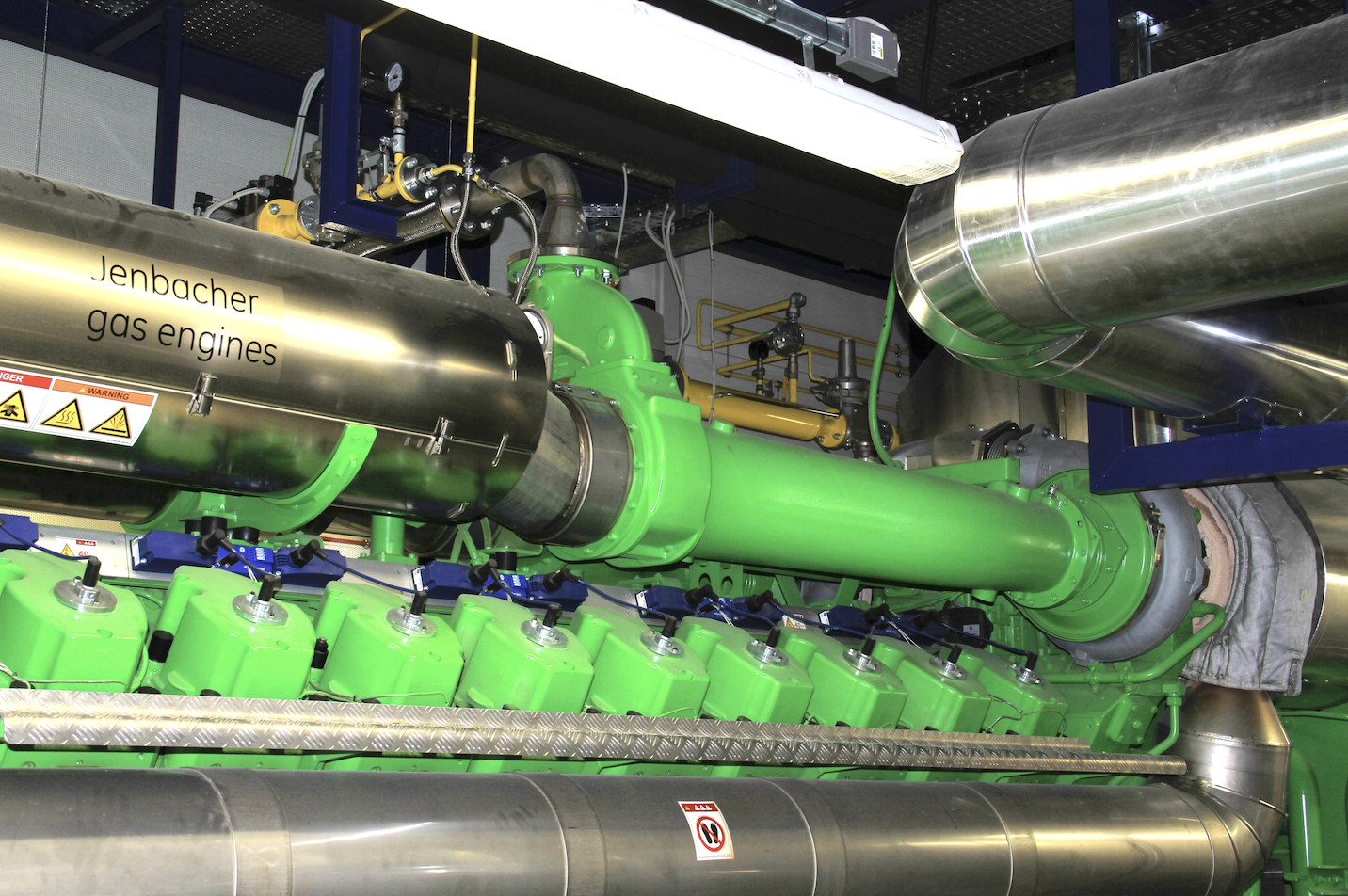
Landfill gas has been part of this scheme since it started in 2002, so a lot of sites have built two decades of income around it. In fact, industry estimates suggest that for some sites, ROCs make up as much as 40 to 50% of total income. That is not a small add-on. For a lot of landfill managers and owners, it is close to half the business case.
Why ROCs are ending
Every ROC-backed project gets a limited window of support. For the earliest projects, their deadline hits on 31 March 2027.
Landfill gas was one of the very first technologies in the scheme, so a large share of those first projects are landfill gas sites, which is why 2027 hits the industry hardest first. Other sites lose their support on later dates, spread out year by year, with the scheme fully winding down by 2037.
On top of that, there is no simple swap waiting to replace it. When the ROC scheme closed to new applicants in 2017, other renewable technologies moved onto a newer support scheme called Contracts for Difference (CfD). Landfill gas has barely featured in that scheme, though. Gas production at a closed landfill declines and becomes less predictable as the site ages, and CfDs require long term certainty, 15 to 20 years, that most landfill sites cannot offer.
So when a site's ROC support ends, there is no equivalent scheme lined up to take its place.
The good news is that engineers do not have to guess when their own ROC support runs out. Ofgem keeps a register of every accredited site and its accreditation date, so anyone can look up their own site and see exactly when their ROC support ends, rather than just knowing it falls somewhere after 2027. Check yours out here.
What this means for landfill sites
For a site that depends heavily on its ROC income, it may become financially unsustainable to keep generating renewable energy. The landfill engineers may have to start flaring the gas instead. Once that happens, the incentive to maintain the landfill infrastructure can disappear too, meaning capture rates could decrease significantly.
Green Alliance estimates the drop could release 88,000 more tonnes of methane a year, roughly what half a million dairy cows produce annually.
How can landfills turn it around?
The ROC scheme ending adds real pressure to a site's economics, but getting past it comes down to decisions made today. Sites must decide to excel at their gas management. There are three paths to making that improvement.
The first is squeezing more value out of the gas already being produced.
- Better well tuning, catching gas earlier, and increasing engine uptime all improve the electricity a site actually generates, independent of what happens to any subsidy.
The second is getting the best price for that electricity.
- Wholesale prices swing throughout the day, and can even turn negative, meaning a site has to pay to export power rather than get paid for it. Some sites manage this actively, using more power on site or holding back exports during those windows.
- Others avoid the exposure altogether by securing a power contract with a fixed, favourable feed-in tariff.
Doing the first two well takes real expertise and, increasingly, automation, since manually checking wells and prices on a periodic schedule cannot keep pace with how quickly conditions change. This matters whether a site's ROC income is a big part of the business or barely felt at all: producing and capturing gas more efficiently is good business either way.
The third path is bigger.
- Instead of only selling electricity to the grid, some landfill engineers are looking at entirely new ways to use their gas, like powering an on-site data center or converting it into alternative fuels such as biomethane.
- These are significant investments, and they only make sense if the gas underneath them is captured reliably and consistently. Nobody commits that kind of capital without knowing the gas supply will hold up once the money is already spent.
This happens to be exactly the kind of problem Hydryx works on, across all three paths. It fits onto a landfill's existing gas wells and continuously tunes them, rather than relying on the periodic manual checks most sites still run today.
Sites using it have seen over 30% more green energy revenue from wells they already have, with no civil works and no upfront investment.
For a site simply looking to get more from the gas it already produces, or better value from what it sells, that is a direct improvement. For a site weighing a bigger investment project, Hydryx is the insurance these projects need to make sure the gas capture can keep up.
There is no changing when ROC support ends. What happens between now and then is still every site's own decision to make. Contact us at Hydryx if you want to see how much more you can get out of your existing gas infrastructure.
.png)

.svg)


